 AUTHORIZED JEKKO DEALER
 AUTHORIZED HYRAX DEALER
What derating actually means
Derating a Jekko mini crane means officially reducing its maximum manufacturer-rated lifting capacity while keeping everything else: the reach, the compact dimensions, the boom geometry, the outrigger flexibility, and the remote-controlled operation. For the SPX328 EVO and the SPX532.2 platform, the crane can be configured with a maximum rated capacity of 1,950 lb, placing it below the 2,000 lb lifting-capacity threshold.
This is not simply telling the operator not to lift more than 1,950 lb. A proper derating is completed through an approved Jekko configuration and includes updated crane software and Load Moment Indicator programming, manufacturer-approved 1,950 lb load charts, updated capacity decals and machine identification, correct operating manuals and documentation, and installation by Jekko or an authorized dealer. The crane's safety system electronically enforces the reduced load chart and prevents the operator from lifting beyond the approved capacity.
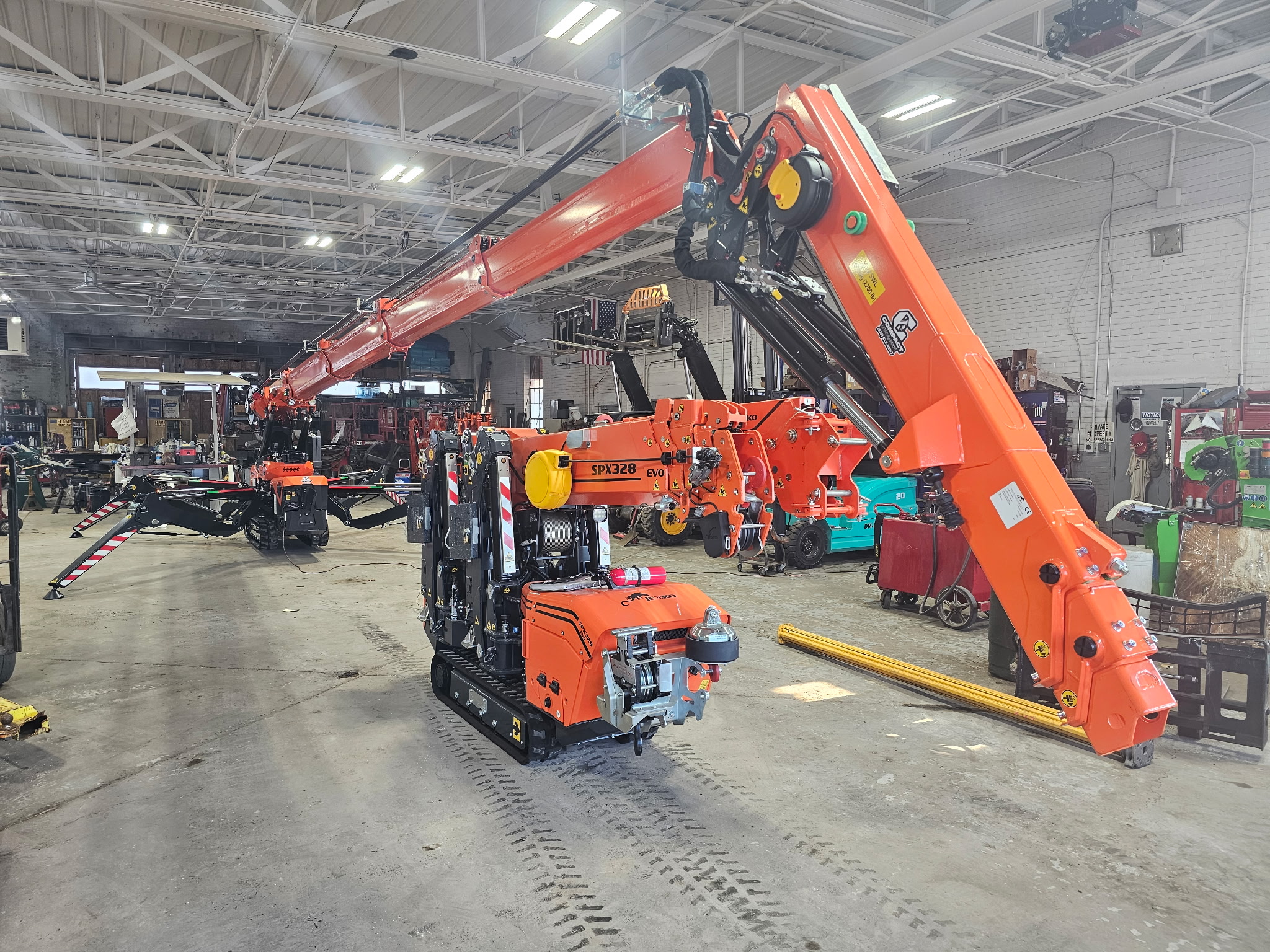
The SPX328 EVO at 1,950 lb
The standard SPX328 EVO lifts approximately 5,950 lb. In its manufacturer-rated 1,950 lb configuration it keeps the same compact footprint and long boom:
That combination suits glass installation, HVAC components, electrical equipment, and machinery installation where the load itself typically weighs less than 1,950 lb.
The SPX532.2 at 1,950 lb: the SPX509.2
The standard SPX532.2 also lifts approximately 5,950 lb. The manufacturer-rated 1,950 lb version of the SPX532.2 platform is commonly identified as the Jekko SPX509.2. The derated machine keeps the platform's reach and versatility while electronically limiting capacity:
The SPX509.2 configuration earns its keep when the load is light but has to land at a serious height or radius: reaching over equipment, production lines, walls, and structural obstructions without mobilizing a larger conventional crane.
Why contractors derate
Reach of a larger crane, rating of a smaller one
A contractor may only need to lift a 1,000 lb glass panel, but may need 40 to 55 feet of height to place it. A derated Jekko provides that working envelope under a 1,950 lb maximum capacity.
No federal crane-operator certification generally required
When the crane is supplied as an official manufacturer-rated 1,950 lb configuration, it falls below the 2,000 lb threshold under federal OSHA construction regulations, so operators are generally not required to hold federal crane-operator certification. That can expand the pool of employees who can run the machine, reduce certification costs, and cut scheduling delays caused by certified-operator availability.
Electronically enforced, easier to approve
The Load Moment Indicator recognizes the approved 1,950 lb chart and stops the lift before the operator can exceed it: a more controlled and defensible configuration than a verbal limit. That tends to make safety departments, facility managers, GCs, and insurance providers more comfortable approving the machine for lighter lifting work.
Where the derated machines work
Typical applications: glass and curtain-wall installation, HVAC placement, electrical switchgear and transformer installation, machinery moving, industrial maintenance, interior steel, data-center construction, manufacturing facilities, historic renovations, and rooftop or atrium work: anywhere loads are under 1,950 lb but access is tight and reach requirements are not.
Interested in a derated configuration? CLE can quote the SPX328 EVO or SPX509.2 setup with the manufacturer documentation included: SPX328 EVO · SPX532.2