 AUTHORIZED JEKKO DEALER
 AUTHORIZED HYRAX DEALER
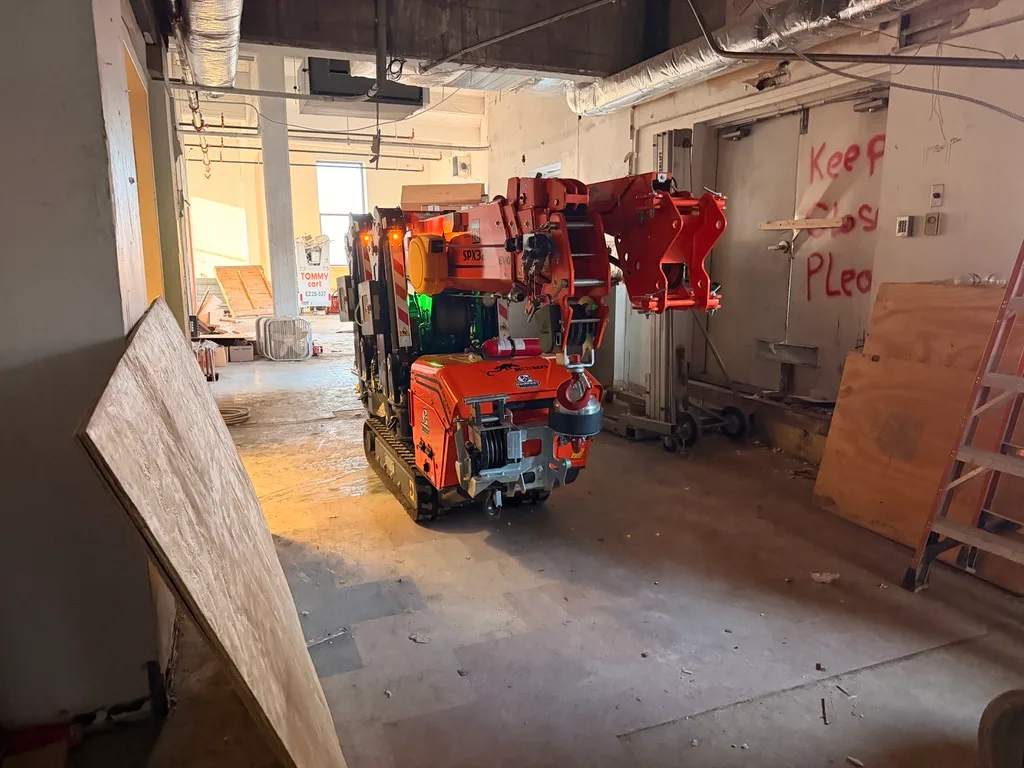
The indoor problem diesel can't solve
Most lifting equipment was designed for open jobsites. Bring it indoors and everything works against you: exhaust in occupied space, noise that stops nearby work, machine weight that finished floors were never designed for, and dimensions that stop at the first doorway. Facilities respond by prohibiting combustion equipment inside, and that is where electric mini cranes earn their place.
Five reasons electric wins indoors
1. No exhaust, no ventilation workarounds
Battery-electric cranes produce no engine exhaust at the point of use. That can simplify indoor planning, but the facility still sets ventilation, air monitoring, occupancy and operating requirements. Review the proposed equipment and work with the facility before delivery.
2. Quiet enough for occupied buildings
Electric drives run at conversation-level noise. Crews hear each other and the signal person, and surrounding tenants or production lines keep working through the lift.
3. Charging from a wall outlet
Confirm the charger and available building supply for the specific battery machine. Maeda dual-power configurations can use electric operation indoors where the machine and building supply are compatible. Charging and simultaneous-operation permissions vary by model and configuration.
4. Light footprint on finished floors
Published track pressures and outrigger reactions help the project team evaluate the floor before the machine arrives. Ground protection can distribute contact load but does not establish the capacity of the structure beneath it. The building engineer must review suspended floors and other uncertain surfaces.
5. Fits the same doors as the trades
The SPX328 CL technical data sheet prints a transport width of 2 ft 5 in. Compare the exact delivered machine's width, height, length and turning route with measured clear openings. A pallet jack passing through a door does not establish that a crane will fit.
Where they earn their keep
Matching the machine to the building
Start with three numbers: the heaviest load, the radius it must travel, and the tightest opening on the path. Run them through the Fit Check tool and the Crane Finder, or send them to CLE with a few photos and we will do it for you. Browse the battery fleet on the Mini Cranes page.
Manufacturer sources and configuration notes
Jekko SPX328 CL 5950 lb TD REV3.2, 19 January 2026, p 6 (transport width, height and headline capacity); pp 13 and 32 (base and EVO-KIT stability selection).